“The Vast Ocean Brings Clarity and Enlightenment”
- In Tribute to Professor Lee Loo Hay, National University of Singapore
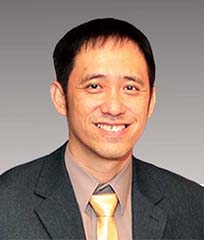
Professor Lee Loo Hay, Director of the Centre for Maritime Studies (CMS) at the National University of Singapore, passed away on 17 March 2022 due to sudden coronary artery disease.
At the end of 2020, we interviewed Professor Lee as part of our feature on the MSc in Maritime Technology and Management at NUS, which was later published as A New Maritime World.
Today, we republish this article in honour and remembrance of Professor Lee.
In Memory:
https://cde.nus.edu.sg/about-us/in-memoriam-professor-lee-loo-hay-educator-and-friend/
I. Welcoming Multidisciplinary Talent into the New Maritime World
During Singapore’s Bicentennial celebrations in 2019, PSA International held a highly symbolic ceremony: around 500 PSA staff took turns in a morning torch relay, starting from Tanjong Pagar Terminal and passing through Keppel, Pulau Brani, and Pasir Panjang Terminals, before finally reaching the site of the future Tuas Port.
Over the past 200 years, Singapore’s maritime lifeline has evolved from sailing ships to container megaships. This journey not only outlines the nation's maritime legacy but also heralds the next-generation maritime blueprint - Tuas Port, with an investment of over SGD 20 billion, is expected to be fully completed by 2040. It is set to become the world’s largest fully automated container terminal, catalysing the regional supply chain ecosystem.
“Singapore possesses world-leading experience in the maritime sector and is committed to a forward-looking, smart maritime vision that positions it as a hub for trade and connectivity,” said Professor Lee.
Singapore has long been preparing to lead the global maritime transformation. As early as 2013, Professor Lee received the Next Generation Container Port Challenge Award from then-Minister for Transport, Mr Lui Tuck Yew.
“At the time, MPA launched the challenge, inviting universities and companies from around the world to contribute innovative ideas for the transformation of future ports. The NUS team partnered with ZPMC and Shanghai Maritime University to take part. In the end, we proposed the concept of a double-storey terminal and won the top award,” Professor Lee explained. “This concept has real potential for implementation. The maritime industry is undergoing an unprecedented period of transformation.”
“That’s why the Master of Science in Maritime Technology and Management (MTM) programme welcomes applicants from diverse academic backgrounds. Talented individuals from maritime studies, as well as engineering, mathematics, physics, statistics, computer science, finance, business, biology, and oceanography, are all invited to play a role in shaping the future of maritime transformation.”
Professor Lee emphasised that this innovative programme breaks away from traditional thinking and draws talent from a wide range of disciplines. The curriculum, which includes maritime knowledge, cutting-edge technologies, and industry internships, is designed to meet students’ aspirations for both academic and practical experience, while directly aligning with technical innovation roles in the maritime sector.
II. A Rigorous, Industry-Focused Curriculum of Core Modules
Since setting its sights on maritime transformation, Singapore has invested significant manpower, resources, and funding into cultivating a new generation of talent for the sector.
“The pandemic brought about major challenges in the global job market, but at the same time, made certain skill sets even more scarce. In the maritime industry, the urgency to reform traditional practices grew stronger due to the pandemic’s impact. The question became: who can help companies successfully transite during this critical period? For instance, CMS is currently collaborating with PSA, MPA, and Jurong Port (JP) to develop and implement digital twin technologies for port operations,” said Professor Lee.
“NUS has a strong foundation in academia–industry collaboration, and we fully leverage this strength in our curriculum to provide students with a clear and promising career path.” Given the specialised nature of the maritime industry, the MSc in Maritime Technology and Management programme comprises seven compulsory modules that are deeply focused on industry-relevant knowledge, including a 15-week internship at a leading global maritime company.
III. Are You the Future Talent of the Maritime World?
On 11 December 2020, the Maritime and Port Authority of Singapore (MPA) and Shanghai Maritime University signed a Memorandum of Understanding during the second Singapore-Shanghai Comprehensive Cooperation Council (SSCCC) meeting. This agreement supports the development of talent and academic exchanges between Singapore and China in the maritime sector.
“In fact, it’s not just Singapore or China - maritime organisations around the world are seeking new types of talent. Traditionally, maritime education focused on navigation and ship operations. But our new training model prioritises data analysis, digitalisation, and maritime transformation design. Our graduates may pursue careers in Asia - such as in Singapore, China, Japan, or South Korea - or venture to Europe, in countries like Denmark or Norway. Others may even go on to pursue doctoral studies.”
As Singapore drives maritime innovation and fosters regional cooperation in maritime transformation, even more opportunities are set to emerge.
“Digitalisation is now an inevitable trend in the shipping industry,” said Professor Lee. “What we truly need is a group of young people who are passionate, driven, and visionary - individuals ready to realise their maritime dreams.”
“When I was studying at Harvard, I learnt to dive and enjoyed the close interaction with the ocean. I also love the song The Ocean by Zhang Yusheng - I often sing it,” he laughed. “And when you're in Singapore, there are so many opportunities to see the sea. The vast open waters give you clarity. Their immensity broadens your perspective and makes you realise just how much more you can achieve.”
I’m someone with a wide range of interests. When I completed my PhD in Engineering Sciences at Harvard University in 1997, my primary focus was on simulation and optimisation. Around the year 2000, Singapore began shifting from manufacturing to a knowledge-based economy, and the upgrading of its air and sea transport hubs became one of the key pillars of this transition.
When the opportunities of the time intersect with your academic training, a kind of “spark” is ignited. My students and I began applying optimisation, operations research, and simulation techniques to solve problems faced by the port industry. The more we contributed, the more opportunities came our way.
In 2020, I took on the role of Director at the Centre for Maritime Studies (CMS) at NUS, where I witnessed the joint establishment of the MSc in Maritime Technology and Management by the Department of Industrial Systems Engineering and Management (ISEM) and CMS. This programme was launched in response to the growing global demand for new talent to lead maritime transformation.
Could you be one of our first cohort of students in 2021?
Professor Lee Loo Hay
16 December 2020
Original article can be found here: https://mp.weixin.qq.com/s/nnez2QM0fsiVPbcsl-kkNg